
Interested in our initiative? Submit your email to receive an invite to the alive collective.
Menu
Written by Michael Elwan – Lived Experience Solutions (LEXs)
This new series is written from lived experience. It includes personal reflections on illness, loss, and caregiving. Please read Michael Elwan’s writer-in-residence series with awareness and care.
The first time I sat in a team meeting, I did not yet know what I was noticing. Only that something in the room did not settle.
Not disagreement.
Not anger.
Something quieter, more disorienting.
We were seated around a long table in a room lit by fluorescent panels that flattened colour and depth. Paper cups of coffee steamed beside open laptops. A whiteboard listed acronyms I was still learning. The conversation moved with the easy confidence of people fluent in institutional time.
Someone spoke about presentation.
Someone named risk factors.
Someone summarised a life in three bullet points and a file number.
I listened carefully, waiting for the person to appear.
What I heard were fragments that felt familiar. A young man who did not speak much. A mother who would not leave the waiting room. A family who declined support but arrived early, every time. I recognised the shape of the story long before I understood its detail. I had lived close enough to it to sense what was missing.
Loss that had no public grammar.
Care that operated as obligation.
Silence shaped by loyalty, reverence, and fear.
None of this entered the room.
The meeting ended exactly on time. Tasks were allocated. The file was closed. Chairs scraped softly as people stood and moved on. I remained seated a moment longer than necessary, aware of a faint, persistent ache.
This was the system I had once needed.
Already, I could feel the distance between how it spoke and how people lived.
At the time, I could not yet name what felt wrong. Only that something essential was being thinned each time a life was rendered manageable. That stories were being cleaned of their weight. That grief was being converted into data.
It was not cruelty. It was not neglect. It was something more ambiguous, and therefore harder to confront.
It was order.
Learning to Hold Without Breaking
Most of my early work happened at night.
Long corridors. Low lighting. The steady hum of machines. The hours when the world loosened its grip enough for people to speak.
At night, stories did not arrive in sequence. They drifted. They stalled. They folded back on themselves. People spoke in fragments, gestures, half-memories. Meaning surfaced slowly, if at all.
Frontline work, I learned, is not only about care. It is about accompaniment. Sitting beside what cannot be repaired. Staying present to what will not resolve. Bearing witness without demanding coherence.
This posture is learned. You train yourself to listen without reaching. To stay near suffering without letting it rearrange your internal architecture. You cultivate a disciplined distance. This is called professionalism.
Sometimes it is necessary.
Sometimes it is how you survive the work.
I recognised this discipline immediately. Long before I entered the workforce, I had learned to stay upright. In my family, collapse was not permitted. You stayed composed. You stayed useful. You learned how to convert feeling into duty, grief into responsibility. The system felt strangely familiar in that way.
But there was a difference I could not ignore.
In my family, silence was saturated with love, reverence, and obligation. It held history. It carried inheritance. In the system, silence was procedural. It functioned to move things along.
One reduced complexity.
The other preserved what could not safely be spoken.
When Stories Cross Thresholds
One evening, a woman sat across from me folding a scrap of paper into smaller and smaller squares. She did not look up as she spoke. Her voice arrived carefully, as though each word had to cross a narrow threshold.
She told me about a house she no longer lived in. About siblings scattered across continents. About a father whose authority still shaped the way she held her shoulders, the way she waited before answering.
She paused often.
Looked at me.
Looked down.
When she finished, she apologised.
The apology stayed with me.
Not for its politeness, but for what it carried; a lifetime of learning to become smaller in order to survive. A discipline of shrinking that had once protected her, and had never quite loosened its hold.
A few days later, her name surfaced again, this time in a different room.
Another table.
Another whiteboard.
Another set of clipped phrases.
Her life returned as fragments. Low confidence. Poor boundaries. Family enmeshment. Dependency traits.
Each description was internally coherent. Each one made sense on its own terms.
And yet, the woman I had sat with; the folded paper, the pauses, the apology; had disappeared.
This was simply what occurs when a human story crosses an institutional threshold.
Another man came up next. In our sessions, he spoke softly, rarely meeting my eyes, always waiting for an older relative to speak first. In the review, this became guardedness, poor insight, limited engagement.
What I had seen was something else. A choreography of respect. A grammar of obedience learned slowly, across years, in places where speaking too soon carried consequence.
Again, the language was not wrong.
It was simply insufficient.
Living Between Worlds
As a worker with lived experience, I came to inhabit an uneasy in-between.
My story gave me access. It also created expectation. I became the one who could interpret, soften, translate. Sometimes this was described as cultural sensitivity. More often, it remained unnamed.
There were moments when my perspective was welcomed. There were others when it became inconvenient. When lived experience aligned with organisational logic, it was described as invaluable. When it complicated timelines it became emotional. Subjective. Excessive.
I learned how to speak without rupturing.
How to suggest rather than insist.
How to translate depth into neutrality.
How to hold authority without sounding like challenge.
I learned which parts of my story could be safely offered, and which needed to remain folded quietly inside me.
This, too, was frontline work.
It carried a particular loneliness.
To belong everywhere and nowhere.
To be inside and outside simultaneously.
To recognise suffering that others could not see, and to see systems that others could not feel.
Moral Loneliness
Burnout did not arrive as collapse.
It arrived as thinning.
A gradual erosion of interior space. The slow wearing away that happens when compassion repeatedly meets institutional edges. The fatigue of recognising familiar suffering, while being required to render it in language that drains it of density.
Many frontline workers carry this quietly. They joke. They normalise. They reassure each other they are managing. They say they are fine.
For those who live between worlds, the burden is heavier. You carry inherited grief into spaces that do not recognise it. You translate histories that cannot be summarised. You absorb cultural dissonance without being given language for your own.
You learn to live with a particular kind of moral loneliness; the knowledge that some forms of knowing have no safe place to land.
What It Takes to Stay
Eventually, the questions deepened.
Not how do I do this work well, but
how do I remain whole inside it.
What does it mean to work inside systems that once misread people like me?
How do you stay open without becoming porous?
How do you honour inheritance without becoming trapped by it?
How do you belong without disappearing?
What sustained me were moments that resisted compression. Sitting beside someone who did not need “fixing”. Allowing grief to move at its own pace. Letting silence exist without interpretation.
These moments reminded me that care is not a transaction. It is a way of standing in the presence of another human being.
They also revealed something quieter, and more unsettling.
That much of our suffering does not come from trauma alone, but from the loss of belonging. From dislocation. From the slow erasure of story. From the absence of witnesses.
What Must Not Be Lost
Over time, I began to understand that most harm in systems arrives through translation.
Through the small, reasonable choices we make about what to carry forward and what to leave behind. Through the quiet decisions about which details matter and which ones slow things down.
Every role inside a system teaches a particular way of seeing. Over time, that way of seeing becomes instinct. We stop noticing what it excludes.
But some lives do not survive compression. Some grief does not become clearer when it is shortened. Some histories cannot be made efficient without losing their meaning.
The work, for all of us, is not simply to act competently, but to stay in relationship with what resists reduction.
To notice when the system’s language begins to feel more real than the person.
That is usually the moment something essential disappears.
Where Humanity Is Held
Working the frontlines taught me that care is not only what we offer individuals. It is also what we build around those who carry the work. Without that, people do not harden out of choice, but out of necessity. They learn which parts of themselves must be set aside in order to keep going.
I still think about that first meeting. About the elegance of the language. About how easily lives vanish when they are rendered manageable.
I do not believe the answer is to abandon professionalism. The work is quieter, and more demanding: to keep insisting on humanity from within it. To hesitate when language drifts too far from lived reality. To pause when efficiency begins to replace understanding. To remain answerable to the person, even when the system asks for speed.
Frontline work exists at the threshold between belonging and erasure. It asks people to carry stories that do not belong to them, and to do so without losing their own.
That is intensive emotional labour.
Often unseen.
Often unsupported.
Often borne in silence.
If we want systems that care well, we must attend to the spaces where care still happens slowly.
The meeting room.
The night corridor.
The waiting chair.
The moment before a note is written.
That is where meaning either survives, or disappears.
That is where people decide what they can afford to feel.
What they must learn to forget.
What parts of themselves they are willing to leave behind.
And where, slowly, they decide whether they can stay.
About the writer



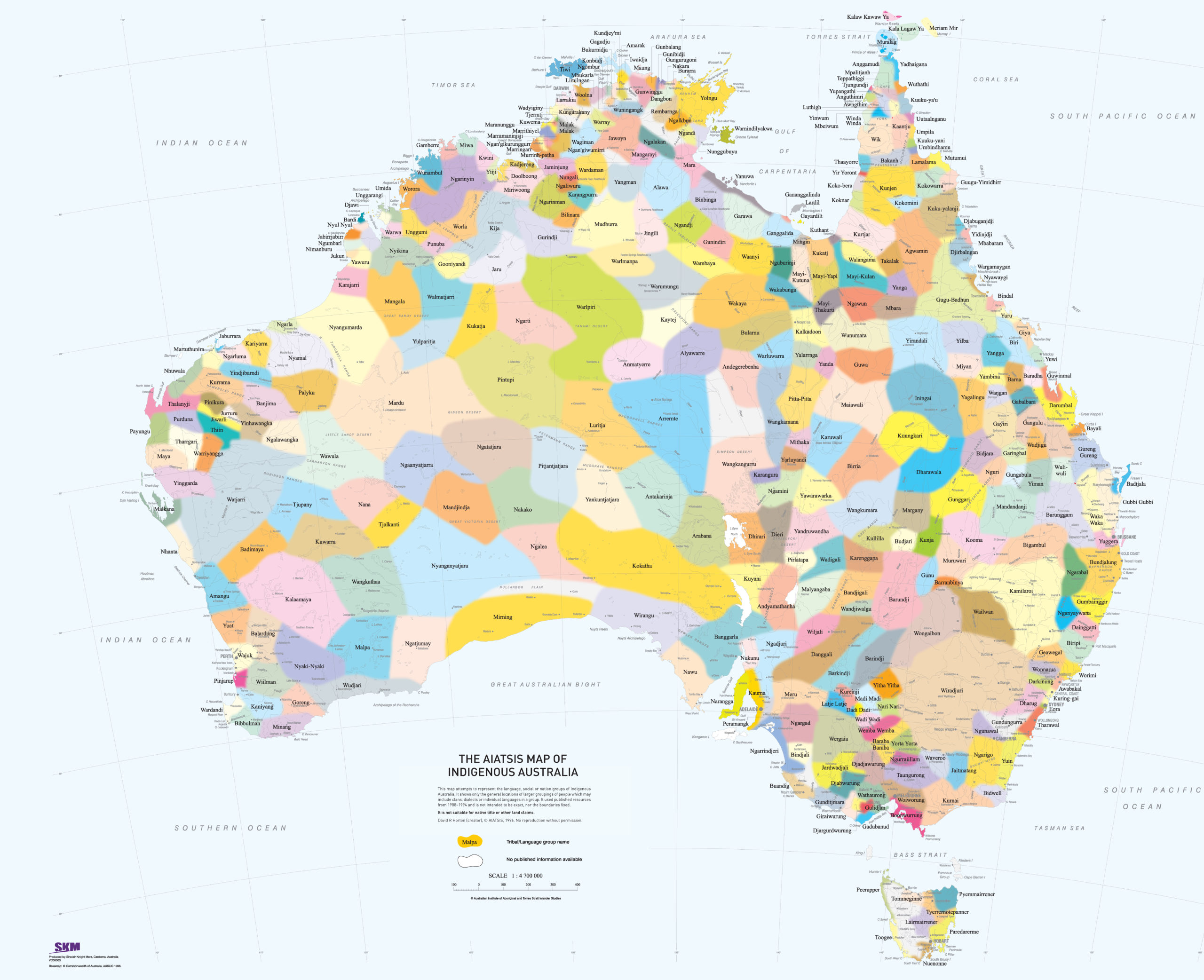
This map attempts to represent the language, social or nation groups of Aboriginal Australia. It shows only the general locations of larger groupings of people which may include clans, dialects or individual languages in a group. It used published resources from the eighteenth century-1994 and is not intended to be exact, nor the boundaries fixed. It is not suitable for native title or other land claims. David R Horton (creator), © AIATSIS, 1996. No reproduction without permission. To purchase a print version visit: https://shop.aiatsis.gov.au/




ALIVE Next Generation Researcher Network Application Form Click here
For University based research higher degree students, early/mid-career mental health researchers
ALIVE Lived Experience Research Collective Application Form Click here
For University and community based lived-experience or carer-focused mental health researchers at all career stages
ALIVE Collective Application Form Click here
For any individuals or organisations with a general interest in supporting the special initiative in mental health
ALIVE Implementation and Translation Network (ITN) Application Form Click here
For sector, service delivery organisations in mental health serving people across the life course and priority populations
If you have a general enquiry about The Alive National Centre for Mental Health Research Translation, please submit an enquiry below