Interested in our initiative? Submit your email to receive an invite to the alive collective.

I’m a lived-experience researcher at Melbourne University, and in April I received an email from my team asking if I would like to help run a workshop at the Australasian Association for Academic Primary Care (https://aaapc.org.au/) conference. Always up for a challenge, I said yes. The location was the beautiful Geelong Waterfront Campus Deakin University. Our workshop idea was accepted, and planning began. We had the journal article “The Participatory Zeitgeist: an explanatory theoretical model of change in an era of coproduction and codesign in healthcare improvement” by Victoria Palmer et. al. to guide us.
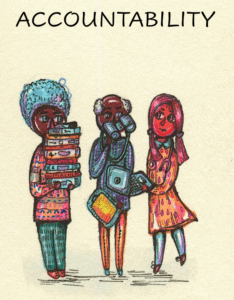
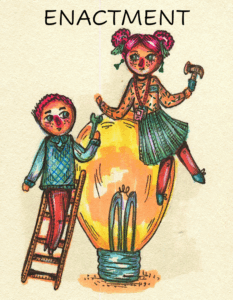
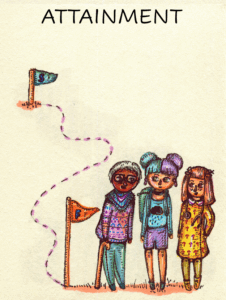
Hand drawn images by Natalie Seiler. No reprint or copying permitted.
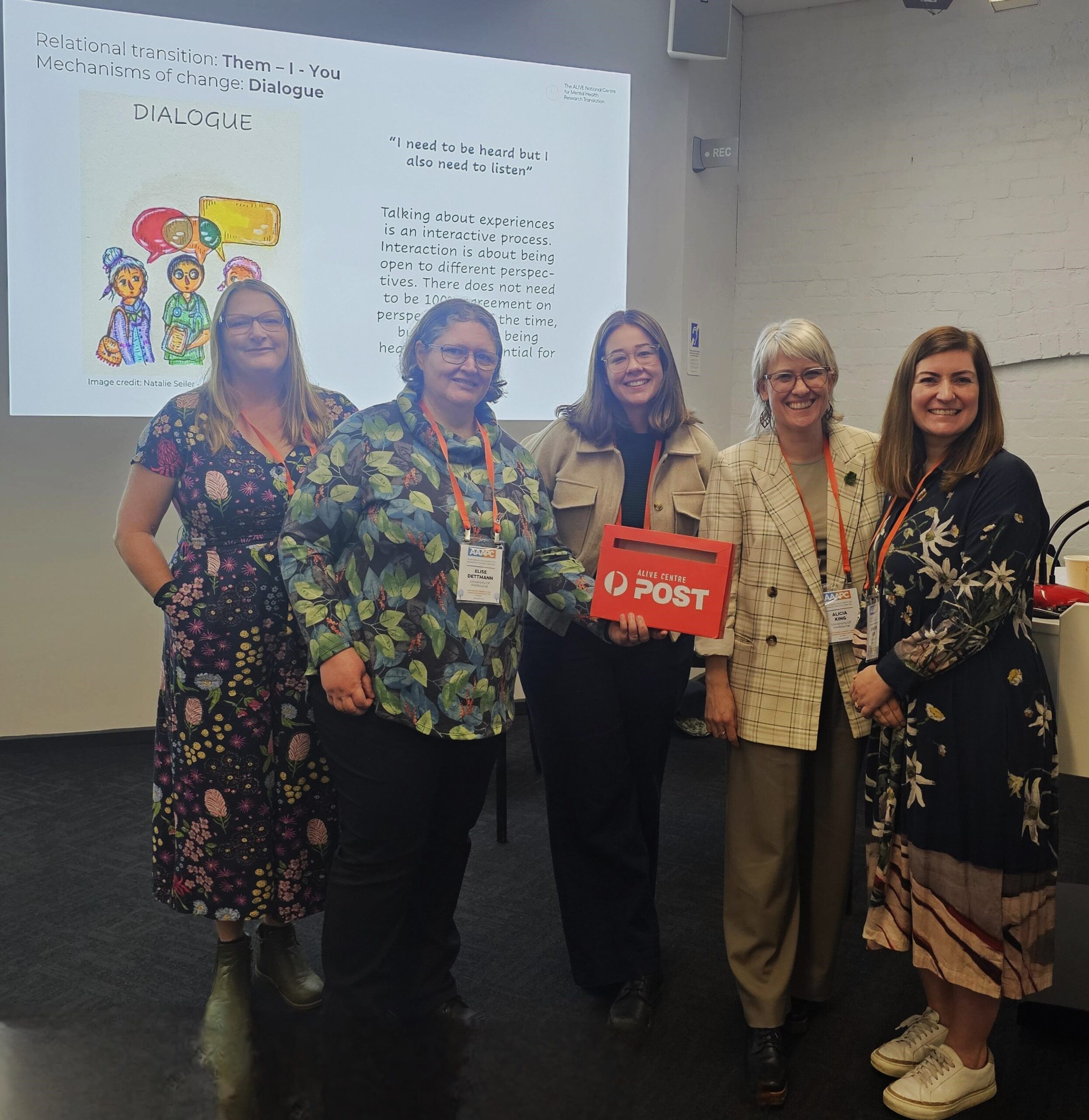
In the workshop, Vicki spoke on the theoretical model of change, Candice ran a menti meter quiz, Jen and Alicia facilitated some lively discussions, and my part of the workshop was to give a 3-minute talk on applying the co-design theory from the point of view of what people with lived experience of mental ill-health thought about seeing their GP about a heart health check. Our team had completed some co-design around this question in 2021.
On Monday 11/8/25, we ran the 45-minute workshop for the 20 people who attended. There were great questions on the day including “What is co-design?” and “How do we combat possible power imbalances in co-design?” There was plenty of time for lively discussions and we finished the workshop by asking people to set a goal around improving one aspect of their co-design work.
Time flew on the day.
Eleven participants shared their goals with us such as:
“To reach out to the participants in our lived experience project to let them know how their contribution has produced a concrete outcome, and what impact that has had.”
“To build a sense of community in my project and establish ways to maintain that human connection throughout the project (e.g., with non-task-related activities)”
“To ensure facilitators introduce themselves to consumers prior to the focus group/co-design.”
In October, we checked in to see how the attendees went with their co-design goals. Eleven attendees had shared their goals with us, and three of these people replied to our brief survey. Of these three, one completed their goal, one partially completed their goal and one ran into some challenges to complete their goal.
Two of the three found the materials and further reading after the session very influential for their co-design activities, and one of the respondents commented that the workshop was “really helpful.”
Dr Alexandra Davidson, recipient of the 2025 AAAPC Hardship Equity Award, further highlighted the workshop as one of two sessions that “stood out as particularly impactful.” She reflected “As someone engaged in co-design and qualitative methods, I found the theoretical frameworks and practical strategies presented to be highly relevant.”
Given the overall positive responses to the workshop, we plan to present the material again at future conferences.
Thank you to Dr Alicia King, Dr Jennifer Bibb, Ms Candice Peart and Prof Victoria Palmer. Together we facilitated what I think was a great workshop on co-design.